Tunisian goat population: An untapped genetic resource for resilient livestock systems
Abstract
The indigenous Tunisian goat, known as the "Arbi" breed, represents a critical yet underutilized genetic resource for building climate-resilient livestock systems in North Africa. Shaped by a unique history of domestication, policy-driven population fluctuations, and adaptation to harsh environments, this breed has developed exceptional traits for heat tolerance, drought resistance, and disease resilience. However, the sector faces significant challenges, including feed scarcity, harsh climates, and a threat to genetic integrity from uncontrolled crossbreeding with exotic breeds. This review synthesizes existing knowledge to highlight the value of the Tunisian goat population by: (1) tracing its historical and political context, (2) characterizing its diverse genotypes and distribution, (3) detailing its unique adaptive traits, (4) analyzing production trends, and (5) discussing major constraints. We conclude that the local "Arbi" goat is an untapped genetic reservoir, and its conservation and structured improvement are paramount for enhancing the sustainability and resilience of pastoral and agro-pastoral livelihoods in Tunisia and analogous regions.
Keywords: Tunisian Goat, Arbi Breed, Genetic Resources, Climate Resilience, Adaptation
INTRODUCTION
Goats (Capra hircus) are indispensable to sustainable livestock production across the globe, particularly in arid and semi-arid regions of developing countries. Renowned for their resilience and adaptability, they provide a critical source of meat, milk, fiber, and income for millions of smallholder farmers, contributing significantly to food security and poverty alleviation (Lu et al., 2023). In the face of climate change, characterized by increasing temperatures and erratic rainfall, the inherent hardiness of goats positions them as a cornerstone for building resilient agricultural systems (Djemali et al., 2024).
Within the North African context, Tunisia hosts a unique and valuable caprine genetic resource: the indigenous goat, commonly known as the “Arbi,” “Bedouin,” or “Moorish” breed (Ressaissi, 2023). This population is the product of a long and dynamic history, tracing its lineage back to Capra hircus aegagrus and shaped by centuries of adaptation to Tunisia's diverse and often harsh environments, from the arid southern plains to the northern mountainous regions. The history of Tunisian goat farming is a narrative of boom and bust, influenced by colonial-era policies that once deemed goats agents of ecological degradation and led to drastic population declines, followed by a period of revitalization focused on sustainable management. This turbulent past has, paradoxically, forged a population with exceptional genetic resilience, embodying traits such as heat tolerance, drought resistance, and an ability to thrive on sparse and low-quality forage (Najari, 2005).
Despite this potential, the Tunisian goat sector stands at a crossroads. The national herd, a mosaic of local “Arbi” goats, introduced exotic breeds (such as Alpine, Saanen, and Boer...), and their crossbreeds, is predominantly maintained in small, subsistence-oriented flocks. The sector faces multifaceted challenges, including harsh climatic conditions, scarcity of feed resources, and a lack of structured breeding programs. Most critically, the uncontrolled introduction of exotic genetics and indiscriminate crossbreeding threaten the genetic integrity and the unique adaptive traits of the local Arbi goat, an untapped reservoir of genes for resilience.
This review synthesizes existing knowledge to highlight the value of the Tunisian goat population as a vital genetic resource for resilient livestock systems by: (1) tracing the historical domestication and policy-driven evolution of goat farming in Tunisia; (2) characterizing the current landscape of goat diversity, distribution, and production systems; (3) elucidating the unique genetic, physiological, and disease-resistance traits that underpin their adaptation; (4) analyzing recent trends in meat and milk production; and (5) discussing the major constraints and challenges facing the sector. By consolidating this information, this review aims to highlight the urgent need for concerted conservation and improvement strategies to ensure that the Tunisian goat can continue to support rural livelihoods and contribute to climate-resilient agriculture in the Maghreb and beyond.
DOMESTICATION AND HISTORICAL SPREAD OF TUNISIAN GOATS
Capra hircus is considered the most primitive goat type in the Maghreb region, with its lineage traced back to Capra hircus aegagrus. In Tunisia, goats were domesticated alongside sheep and were initially concentrated on the island of Galite until around 1910, when their distribution expanded to other regions (Blondier and Aronson, 1999; Pereira et al., 2009). The indigenous Tunisian goat—commonly referred to as “Arbi,” “Bedouin,” or “Moorish”—originated from domestic animals introduced by sailors during frequent maritime exchanges on the island. These local goats are characterized by their small stature, long hair, and dark brown to black coat (Nafti et al., 2009; Gaddour et al., 2013). Since domestication, goats have gradually spread across all regions of Tunisia, adapting to diverse ecological zones from arid lowlands to mountainous areas.
During the first period, goats were primarily raised in hot, arid, and marginal zones, often in mixed herds with sheep and cattle. Between 1931 and 1951, the national goat population nearly doubled, rising from 1,200,000 to 2,242,390 heads (Bello, 2002). However, poor herd management—particularly the imbalance between grazing pressure and the regenerative capacity of rangelands—led to severe degradation of natural vegetation, including the erosion of shrub species. Goats were widely perceived as agents of ecological disorder, prompting measures to reduce, and in some cases eradicate, their populations. Law No. 58-58, enacted on 25 August 1958, prohibited goat farming in northern and central Tunisia, resulting in a drastic decline in numbers—by 90% in the North and 50% in the Center—leaving only 421,000 head between 1951 and 1970 (Bello, 2002). Despite this decline, goats continued to play a critical socioeconomic role, providing milk, meat, and hides, particularly for pastoral communities in marginal regions where other livestock were less viable.
The second period marked a shift towards the revitalization and modernization of goat farming. Following an international congress organized by the Food and Agriculture Organization (FAO), global interest in sustainable goat husbandry was renewed, including in Tunisia (Baticle, 1963). In response, Law No. 70-33, enacted on 3 July 1970, replaced the focus on prohibiting goat farming with regulations aimed at controlling unsustainable grazing practices. This legal and policy shift facilitated the recovery and expansion of goat populations across Tunisia while promoting more sustainable management practices (JORT No. 33, 1970). Goats became integral to smallholder livelihoods, particularly in rural and marginal areas, contributing not only to nutrition and income but also to maintaining traditional pastoral knowledge.
These historical dynamics have directly shaped the genetic diversity and resilience of Tunisian goats. Populations subjected to harsh environmental conditions, selective management, and spatial isolation—such as those on islands or in arid zones—developed adaptive traits, including disease resistance, tolerance to heat and drought, and the ability to utilize sparse forage resources efficiently. The interaction between historical management, ecological pressures, and socioeconomic needs has thus created a population of goats that is both genetically diverse and highly resilient, representing a valuable livestock resource for Tunisia and the broader Maghreb region.
THE LANDSCAPE OF GOAT DIVERSITY IN TUNISIA
Goat population
The current Tunisian goat population constitutes a mosaic of diverse genotypes (Gaddour and Najari, 2010). It is dominated by local Arbi goats, encompassing both Bedouin (meat-oriented) and Oasis (milk-oriented) types, alongside exotic breeds introduced through national development programs and their derived crossbreds (Jemmali and Villemot, 1995).
Arbi goat
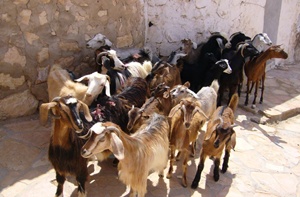
The local goat is a hardy and resilient animal, well adapted to Tunisia’s harsh and variable natural environments. It is the most competitive species in marginal areas where natural resources are scarce (Najari, 2005). The introduction of various exotic genetic groups has created a heterogeneous population with diverse coat colors. Nevertheless, the continued use of local goats has preserved many of their defining traits, despite some dilution of Nubian breed characteristics (Gaddour et al., 2008). Locally known as “Arbi,” these goats typically have a black long-haired coat, often with a ventral stripe, white markings on the forehead, muzzle, or ears, and may possess horns and wattles. Black coloration predominates, with a frequency exceeding 60%, while piebald coats represent about 20% of the population (Najari, 2005; Najari et al., 2007a). Gaddour et al. (2013) highlighted substantial morphological variability among goats in arid and semi-arid regions, noting that 5% were polled, while 18% and 39% displayed wattles and beards, respectively. Bello (2002) further distinguished goats of the North from those in the Center and South. Northern goats (in Béja, Bizerte, Jendouba, and Siliana) are larger, with average heights of 70 cm for males and 60 cm for females. They have long coats, short black heads, long pendulous ears, and horns restricted to males. Their necks are slender, backs straight, chests well-developed, and limbs long and fine. By contrast, goats from central and southern regions are smaller and display two main variants: one with a white head and the other with a black head. This heterogeneity is evident not only in morphology but also in performance. According to Bello (2002), average body weights were 45 kg for males and 35 kg for females in the North, compared with 30 kg and 25 kg, respectively, in the Center and South. Najari et al. (2005) reported adult mean weights of 17 kg in coastal areas, 22 kg in steppe areas, and 23 kg in mountainous areas. Gaddour et al. (2008) noted that local goats generally have low live weights, averaging 38 kg for males and 24 kg for females, depending on feed availability and physiological stage. Growth performance studies showed mean kid weights of 2.9 kg at birth, 6.7 kg at 30 days, 11.9 kg at 90 days, and 12.8 kg at 120 days (Gaddour et al., 2012). More recently, Atoui et al. (2023) reported an average body weight at birth of 2.45 kg, while Atoui et al. (2024) observed that kid weights ranged from 1.4 kg on the day after birth to 23.4 kg at weaning. Milk production in local goats is generally low, particularly in mountainous regions, while dairy goats are more commonly found in Saharan oases, where they are raised in small flocks. Najari (2005) reported an average lactation yield of 98.0 kg. In a comparative study of genotypes, Gaddour et al. (2010) observed an average yield of 133 kg per lactation over 175 days, corresponding to a mean daily production of 700 g. Similarly, Mekki et al. (2011) recorded initial daily yields averaging 729 g, with a peak of 980 g/day reached 17 days after kidding. More recently, Atoui et al. (2023) analyzed data from 34 local goats belonging to the experimental herd at the El Gordhab station. Their results showed an average daily milk yield of 620 g/day, ranging from 250 to 1200 g/day, with the lactation peak occurring 21 days after kidding, when the mean daily yield reached 840 g/day.
Exotic Goat Breeds Introduced into Tunisia
Alpine
The Alpine goat, originating from the Swiss and French Alps, was introduced to Tunisia in the early 1980s through genetic improvement programs. It is now mainly found in the governorates of Medenine, Kebili, Tozeur, Sfax, and Sidi Bouzid. Renowned for its high dairy potential, the breed can produce up to 886 kg of milk over a 295-day lactation in its native regions (Belanger, 1990). Adult Alpine females typically weigh 55–61 kg, while adult males are considerably larger at a minimum of 77 kg (Vlad et al., 2013; Maksimović et al., 2015). The Alpine has a short, dark chestnut coat, a short head, and small ears. In Tunisia, Chalbi et al. (2022) reported birth weights of 3.94 kg, increasing to 12.1 kg at 90 days, with average daily gains ranging from 80.9 to 95.5 g/day during the growth period.
Maltese
The Maltese goat originates from the island of Malta. In the late 1980s, the Tunisian Office of State Lands (OTD) introduced a nucleus herd at Oued Laabid. The breed subsequently spread across Tunisia, particularly in Bizerte, Nabeul, and Jendouba. Known for its strong dairy potential, the Maltese produces an average of 350 kg of milk per lactation (Delfino et al., 2011; De Marzo and Nicastro, 2017). In North of Tunisia, yields averaged 1.01 liters/day (Bello, 2002). The Maltese is relatively small, with males weighing 40–60 kg and females 40–50 kg (De Marzo and Nicastro, 2017). All coat colors may occur, but yellowish wheat and light to dark brown predominate in Tunisia. The head is elongated with a convex profile, often black in the Nabeul population. The ears are long, pointed outward, and the goats are generally hornless, with males commonly bearing beards (Bello, 2002).
Saanen
The Saanen goat, originating from Switzerland’s Saane Valley, was imported for both its dairy potential and robustness. In Tunisia, it has integrated successfully into local herds (Ben Hamouda et al., 1991). Saanen goats typically have a short-haired white coat, a straight head profile, and well-developed udders. Average production varies with feeding, climate, and lactation length, but generally ranges between 700 and 1,200 kg per lactation, with elite herds exceeding 1,500 kg (Carnicella et al., 2008; Teissier et al.,2024).
Boer
The Boer goat, native to South Africa, was introduced into Tunisia for its superior meat production. Adapted to hot climates, it has also proven resilient under harsher European conditions. In Tunisia, it is mainly found in Nabeul, Zaghouan, and Bizerte. Adult males weigh 75–90 kg and reach 75–80 cm in height, while females weigh 50–60 kg and measure around 77.8 cm (Gall, 1996). Chalbi et al. (2022) reported birth weights of 3.90 kg, increasing to 12.2 kg at 90 days, with average daily gains ranging from 85.6 to 92.0 g/day. The breed is characterized by a short-haired white coat, a short brown head, long pendulous ears, a broad chest, and a slightly concave back.
Damascus
The Damascus goat, originating from Syria, is a large-framed breed introduced into Tunisia for its meat and milk production. It is now distributed across the country, particularly in Nabeul, Sfax, Medenine, Tozeur, and Kebili (Bello, 2002). The breed is characterized by a small concave head, long pendulous ears, and a dense reddish-brown coat. Adult males typically reach 80–90 cm in height and weight around 80 kg, while females measure approximately 60 cm and weigh about 60 kg. Chalbi et al. (2022) reported birth weights of 3.99 kg, increasing to 13.2 kg at 90 days, with average daily gains ranging from 87.8 to 121.2 g/day during the growth period. In Tunisia, Damascus goats produce an average of 1.22 kg of milk per day over a 145-day lactation (Gaddour et al., 2008).
Murciana
The Murciana goat is a Spanish dairy breed recognized for its hardiness and adaptability to diverse climates and environments. In Tunisia, it is mainly found in Medenine (Bello, 2002). It has a short-haired, uniformly mahogany or black coat, with a medium-sized triangular head and sub-concave profile. Females are light and slender, with long necks, while males are shorter and more robust. Average weights range from 45–50 kg in females to 60–75 kg in males. In Tunisia, milk yield is estimated at 1.20 kg/day over a 156-day lactation (Gaddour et al., 2008).
Crossbreeds
To overcome the low milk and meat performance of local goats, crossbreeding with exotic breeds has been implemented in development initiatives. In southern Tunisia, absorption crossbreeding with Alpine and Damascene goats was undertaken to enhance milk and meat productivity. Similarly, the introduction of Boer and Maltese goats at the Oued Laabid station led to frequent crossbreeding (Local × Boer; Local × Maltese), producing offspring with superior growth and production potential compared to local goats. The growth performances of the Arbi population, exotic breeds, and crossbreds are summarized in Table 1.
DISTRIBUTION OF GOATS IN TUNISIA
Geographic distribution
The goat population is unevenly distributed across Tunisia and has shifted over time. Prior to 1988, approximately 50% of goats were located in the South, 37% in the Center, and only 13% in the North. By 1998, the proportion in the South remained stable, while the share in the North increased from 13% to 25%, and that of the Center declined from 37% to 25%. In 2004–2005, goat populations in the South and North showed a slight increase, rising to 53% and 26%, respectively, while the Central region further declined to 20% (Najari et al., 2005). The most recent statistics (2021–2022) indicate that the South still hosts the largest share of the national herd, with 43% of goats. The dominant breed remains the local “Arbi” goat, reflecting the strong association between goat prevalence, drought intensity, and limited feed resources. Goats are less prevalent in the North, accounting for 29% of the herd, though goat farming continues to hold significant importance in these regions. The remaining population is distributed across the Center. This regional evolution highlights the resilience of local goats in the arid South, where environmental pressures remain high. At the same time, the relative growth of goat populations in the North reflects more favorable agro-ecological conditions and evolving land-use practices, suggesting contrasting but complementary roles for goat farming across the country.
Goat population distribution by farm size
In Tunisia, the majority of the goat population is concentrated in small-scale farms. According to Djemali and Kayouli (2000), about 60% of the national goat herd was found in farms with an area of less than 10 ha. This structure has remained relatively stable over time. More recent data show that in 2022, farms smaller than 20 ha still accounted for 70.9% of the goat population (ONAGRI, 2022). Medium-sized farms, covering 20–100 ha, represented 24.6% of the herd, while large farms exceeding 100 ha accounted for only 4.5% of the national total (Figure 2). This concentration of goats in smallholder farms illustrates their integration into mixed crop–livestock systems, where they play a complementary role to cereals, olives, and other agricultural activities. While such small-scale structures support household resilience and food security, they also limit economies of scale and can restrict access to modern breeding or management technologies.
Goat Population Distribution by herd size per farmer
Goat herds in Tunisia are generally very small. Approximately 58% of farmers own between 1 and 3 goats, while 33% keep between 4 and 6 goats. Only 10% of farmers maintain medium-sized herds of 11 to 50 goats, and a very small minority (1%) manage more than 50 goats (Figure 3). This predominance of micro-herds confirms the subsistence nature of goat farming, where animals are often kept for family consumption, occasional sales, or as a form of savings rather than for commercial production. While this system contributes to the conservation of local genetic resources and to the diversification of rural livelihoods, it also constrains the potential for productivity gains and market-oriented development.
UNIQUE GENETIC TRAITS AND ADAPTATION
Goats in Harsh Tunisian Environments
In the arid south of Tunisia, as well as in other desert and semi-arid regions of the world, the climate is harsh and unforgiving. Rainfall rarely exceeds 200 mm annually, while summer temperatures can soar to 47 °C (Ouni et al., 2007). These climatic conditions impose serious constraints on agriculture, water availability, and forage production. In such settings, goats have long been favored by pastoralists over other livestock species, due to their superior resilience to multiple environmental stressors, particularly heat, water scarcity, and poor forage conditions (Atoui et al., 2023). Najari (2005) emphasized that goats’ small body size confers advantages in thermoregulation by reducing radiant heat load, while also lowering their absolute requirements for energy, water, and home range. Furthermore, their capacity to digest fibrous dry matter and recycle nitrogen efficiently allows them to sustain productivity where sheep and cattle often fail.
Morphological and Behavioral Adaptations
Goats’ morphological traits are central to their resilience. Their small size, hardy hooves, and efficient dentition allow them to exploit marginal grazing lands and traverse rugged terrains typical of Tunisia’s central and southern regions. Coat variation also plays a role: lighter, sleek coats dominate in hot arid zones, while thicker coats are found in goats from cooler, elevated areas. Behaviorally, goats are agile climbers and highly selective browsers, enabling them to access shrubs, weeds, and tree leaves unavailable to grazers, a key advantage in the degraded rangelands of Tunisia.
Physiological Adaptations
At the physiological level, goats exhibit exceptional water conservation mechanisms that make them particularly suited to Tunisia’s drylands. Efficient renal function, reduced sweating, and rumen water storage allow them to withstand prolonged dehydration without significant loss of performance (Kaliber et al., 2016). They also tolerate high salinity in drinking water, a growing challenge in many Tunisian oases and arid zones, without compromising survival (Runa et al., 2019). These traits not only sustain productivity in drought-prone areas but also reduce reliance on external water inputs, strengthening goats’ role in climate-resilient livestock systems.
Genetic and Molecular Basis of Resilience
Genetic studies reveal that Tunisian and other indigenous goat populations harbor high levels of genetic diversity, providing a reservoir of adaptive alleles linked to heat tolerance, immune resilience, and even hypoxia response in mountainous ecotypes (Lu et al., 2025; BenSouf et al., 2025). Molecular evidence highlights the role of stress-related genes such as HSP70, which is differentially expressed in indigenous breeds to mitigate cellular damage under heat stress (Aleena et al., 2018). Moreover, genomic investigations in Mediterranean breeds show patterns of runs of homozygosity and heterozygosity that reflect long-term selection pressures in diverse environments, from humid coastal areas to arid inland regions (Pegolo et al., 2025). These findings confirm that the adaptive traits observed in Tunisian goats are not merely phenotypic but are deeply rooted in their genetic makeup.
Disease Resistance in Tunisian Goats
Indigenous Tunisian goats, particularly the Arbi breed, exhibit notable resilience to a range of endemic diseases and parasites, which is essential for maintaining their health and productivity under the challenging environmental conditions of Tunisia. They show relative resistance to gastrointestinal nematodes, likely due to both long-term exposure and traditional management practices such as grazing on communal natural pastures, which help develop natural immunity and are associated with specific genetic regions influencing parasite resistance and immune responses (Ahbara et al., 2021). Goats also demonstrate tolerance to tick-borne pathogens, with studies detecting Rickettsial DNA in ticks collected from goats, yet noting that indigenous goats appear more resistant to infection compared to other livestock, possibly reflecting adaptive immune mechanisms (Ahbara et al., 2022). Viral diseases, such as Peste des Petits Ruminants (PPR), have caused outbreaks in Tunisia, but indigenous goats exhibit variable susceptibility, suggesting that their immune system can partially mitigate disease impact (Ben Hassen et al., 2016). Similarly, Brucellosis prevalence varies geographically, with local goat populations in some regions showing lower infection rates, indicating potential genetic resistance or the benefit of extensive management practices (Ben Abdallah et al., 2025). Mastitis, a common condition in dairy goats, occurs less severely in indigenous Tunisian breeds; while subclinical cases are reported, clinical mastitis is relatively uncommon, reflecting the hardiness and local adaptation of these animals (Kabui et al., 2024). Collectively, these observations demonstrate that Tunisian goats possess integrated genetic, immunological, and management-related traits that confer resistance to a spectrum of endemic diseases, ensuring sustainable production even under the hot, dry, and resource-limited conditions characteristic of southern Tunisia.
EVOLUTION OF GOAT PRODUCTION IN TUNISIA
The goat, deeply embedded in the culture and traditions of rural societies, represents a model of adaptation to local socioeconomic and environmental conditions. Goat farming contributes to the revitalization of rural communities and supports food security by providing self-sufficiency in animal protein, including meat and milk. Goat meat is valued for its flavor and nutritional quality, while goat milk is prized for cheese making. Goat hair and hides are also commercially sought after.
Goat meat accounts for 7.5% of total red meat production in Tunisia (ONAGRI, 2022). Consumption is highest in the South, where it exceeds 30% of total red meat intake. Milk-fed kid meat remains the primary commercial product from pastoral and agro-pastoral systems (Najari, 2005). Over the last decade (2013–2021), goat meat production increased from 9,500 tonnes to 11,200 tonnes, representing a net gain of 1,700 tonnes (ONAGRI, 2022) (Figure 4). However, a significant proportion of goats are slaughtered outside official channels during festivals or for household consumption, leading to an underestimation of total production.
Beyond their ability to survive and produce under limited pastoral resources, goats are also valued for their higher milk yield compared to sheep. Between 2010 and 2013, goat milk production increased by 2,992 tonnes. From 2014 onward, a gradual decline was observed, reaching approximately 11,000 tonnes in 2020 (Figure 5). Due to the lack of formal milk collection systems, most milk is indirectly accounted for through meat production from kids aged 6–9 months, while a portion is retained for household consumption and thus excluded from national statistics (Gaddour and Najari, 2009).
This production pattern highlights the multifunctional role of goats in Tunisia: they provide meat, milk, and by-products while thriving in marginal environments. The reliance on informal marketing channels and household-level consumption underscores both the socioeconomic importance of goats and the challenges in capturing accurate production statistics, which has implications for policy planning and development interventions.
CONSTRAINTS AND CHALLENGES
The goat sector in Tunisia faces several shared constraints, which can be grouped into key categories:
Difficult climatic conditions
Irregular rainfall and prolonged, successive droughts are among the primary challenges for goat farming in Tunisia. Dry seasons significantly reduce available grazing areas, limit forage availability, and degrade crop residues. Consequently, some farmers are forced to reduce herd size, often selling animals at low prices, or to limit reproduction in order to maintain the remaining herd.
Scarcity of feed resources
In 1965, natural pastures supplied approximately 65% of the nutritional needs of the national herd; today, this contribution is estimated at only 10–20% (Elloumi et al., 2001). Urban expansion and increased cultivation have drastically reduced pasture areas. The resulting high demand for available grazing has led to vegetation degradation, diminishing forage productivity and forcing farmers to rely on imported concentrate feeds such as barley, soybean, and maize. Additionally, most goat herds belong to smallholders who lack land, limiting the integration of crop and livestock systems (Djemali, 2004).
Uncontrolled crossbreeding and introductions
The genetic diversity of goats in Tunisia is increasingly threatened by global agricultural trends and population growth, which has heightened demand for animal products and promoted the replacement of local breeds with higher-yielding exotic varieties (Agossou, 2017). The pursuit of rapid productivity gains, which local goats could not meet, encouraged the importation of exotic breeds. Furthermore, indiscriminate crossbreeding, the absence of structured selection programs, and limited government policies have resulted in the neglect and gradual abandonment of local goats over time (Djemali and Bedhiaf-Romdhani, 2005).
Constraints in performance monitoring
Characterizing production systems and evaluating herd performance are essential steps in livestock development programs. Establishing a national database of goat performance remains a major challenge in Tunisia. Except for a few experimental OEP farms, government monitoring of goat herds has long been minimal, often limited to birth and sale weights (Chalbi et al., 2022). Most data originate from experimental stations, involving a small number of animals managed under systems very different from those of the majority of the population. These data are often confounded by genotype–environment interactions (Agossou, 2017).
Collectively, these constraints underscore the vulnerability of the Tunisian goat sector to environmental, socioeconomic, and institutional pressures. While goats remain highly resilient and crucial to rural livelihoods, improving feed availability, establishing structured breeding programs, and implementing robust performance monitoring are essential steps to unlock the sector’s full productivity potential and safeguard local genetic resources.
CONCLUSION
The Tunisian goat sector is fundamentally characterized by its fragmentation into small-scale, subsistence herds. This structure presents a dual reality: while it plays a crucial role in conserving local genetic resources and providing a vital safety net for rural families, it simultaneously constrains productivity and commercial potential. The predominance of micro-herds is not merely a statistical feature but the principal barrier to the sector’s economic development, as it inherently limits economies of scale, technological adoption, and market integration. Therefore, for the sector to evolve, future policies and development programs must be deliberately tailored to this reality. Initiatives aimed at improving genetics, health, and nutrition must be designed for accessibility by smallholders. Ultimately, transforming subsistence into sustainable commercial viability will depend on strategies that promote producer cooperation, develop value-added products, and forge better market linkages, all while safeguarding the critical role these herds play in rural livelihoods.
REFERENCES
Agossou D.J., Koluman N. (2018). Sustainability of local goat genetic resources in the Mediterranean region. In: Sustainable Goat Production in Adverse Environments, Vol. I: Welfare, Health and Breeding, 15-29. Cham: Springer International Publishing.
Ahbara A.M., Khbou M.K., Rhomdhane R., Sassi L., Gharbi M., Haile A., Mwacharo J.M. (2022). Genome variation in tick infestation and cryptic divergence in Tunisian indigenous sheep. BMC Genomics, 23: 167.
Ahbara A.M., Rouatbi M., Gharbi M., Rekik M., Haile A., Rischkowsky B., Mwacharo J.M. (2021). Genome-wide insights on gastrointestinal nematode resistance in autochthonous Tunisian sheep. Scientific Reports, 11: 9250.
Aleena J., Sejian V., Bagath M., Krishnan G., Beena V., Bhatta R. (2018). Resilience of three indigenous goat breeds to heat stress based on phenotypic traits and PBMC HSP70 expression. International Journal of Biometeorology, 62: 1995–2005.
Arain M.A., Rasheed S., Jaweria A., Khaskheli G.B., Barham G.S., Ahmed S. (2023). A review on processing opportunities for the development of camel dairy products. Food Science and Animal Research, 43: 383–401.
Atoui A., Carabano M.J.C., Laroussi A., Abdennebi M., Ben Salem F., Najari S. (2023). Factors influencing daily milk production variation in suckling local goats. Journal of Oasis Agriculture and Sustainable Development, 5: 37–44.
Atoui A., Carabano M.J.C., Lasoued M., Laroussi M., Abdennebi M., Tlahig S., Ben Salem F., Najari S. (2023). Prediction of birth weight using body measurements of local caprine population kids raised in a low-input breeding mode under arid environment. Tropical Animal Health and Production, 56: 15.
Atoui A., Najari S., Diaz C., Ramón M., Ragab M., Laaroussi A., Abdennebi M., Carabaño M.J. (2024). Evaluating heat stress effects on growth in Tunisian local kids: Enhancing breeding strategies for arid environments. Animals, 14: 2846.
Baticle Y. (1963). L’évolution de l’élevage des ovins et des caprins dans les pays méditerranéens d’après les rapports de deux récents congrès de zootechnie. Annales de Géographie, 72: 99–106.
Belanger J. D. (1990). Raising milk goats: The modern way. Revised edition. Storey Publishing, 21–33.
Bello A. (2002). Inventaire de la diversité génétique des ovins et des caprins en Tunisie. Mémoire de Master de recherche, INAT.
Ben Abdallah I., Kopprio G., Béjaoui A., Köhler S., Guesmi K., Kalthoum S., Gatz J., Arfaoui A., Lachtar M., Hajlaoui H. (2025). Hybrid whole genomes of Brucella melitensis from Tunisian animal isolates: Virulence factors, antimicrobial susceptibility, and phylogeny. Microorganisms, 13: 1651.
Ben Hammouda M., Djemali M., Dahmane T. (1991). Analyse des données relatives au croisement d’absorption de la chèvre locale à l’Institut des Régions Arides (Medenine). INAT: Tunisia.
Ben Hassen S., Monaco F., Sghaier S., Orsini M., Valleriani F., Haj Ammar H., Cosseddu G.M. (2018). Peste des Petits Ruminants outbreaks in Tunisia in 2016. Transboundary and Emerging Diseases, 65: 1416–1420.
BenSouf I., Dhib I., Bejaoui S., Ouled Ahmed H., Khemiri H., M’Hamdi N. (2025). Genetic diversity and population structure of the indigenous goat population in northwestern Tunisia. Archives Animal Breeding, 68: 409–423.
Blondier J., Aronson J. (1999). Biology and Wildlife of the Mediterranean Region. Oxford University Press, 31–50 p.
Carnicella D., Dario M., Caribé Ayres M.C., Laudadio V., Dario C. (2008). The effect of diet, parity, year and number of kids on milk yield and milk composition in Maltese goat. Small Ruminant Research, 77: 71–74.
Chalbi S., Bedhiaf Romdhani S., Djemali M.N. (2022). Effect of breed and nongenetic factors on body weight and average daily gains of goats in Tunisia. International Journal of Innovative Approaches in Agricultural Research, 6: 330 - 339.
D.G.P.A. (2021–2022). Indicateurs clés des filières agricoles en Tunisie 2022.
De Marzo D., Nicastro F. (2018). The Jonica and Maltese goat breeds reared in different regions of Italy. In: Sustainable Goat Production in Adverse Environments, Vol. II: Local Goat Breeds, 165–179. Cham: Springer International Publishing.
Delfino R.P., Selvaggi M., Celano G.V., Dario C., Animals A. (2011). Heritability estimates of lactation traits in Maltese goat. World Academy of Science, Engineering and Technology, 5: 6–22.
Djemali M., Bedhiaf S. (2005). Genetic threats and potentials to improve native goats in Tunisia. European Association for Animal Production, 115: 300-304.
Djemali M., Chetoui C.H., Arous M., Jlidi A., Bedhiaf Romdhani S., Ben Gara A., Ktari S., Slimane N., Haddad M., Allani S., Issaoui H., Belli H., Dhaouadi M. (2004). Rapport national des ressources génétiques animales. FAO Report, 1–40.
Elloumi M., Nasr N., Selmi S., Chouki S., Chemak F., Raggad N., Karray R.H. (2001). Options de gestion des parcours et stratégies individuelles et communautaires des agropasteurs du centre et du sud tunisien. Communication au séminaire international: Policy and Institutional Options for the Management of Rangelands in Dry Areas, Hammamet, 6–11.
Filipe Pereira S., Queirós S., Gusmão L., Nijman I.J., Cuppen E., Lenstra J.A., Econogene Consortium, Davis S.J.M., Nejmeddine F., Amorim A. (2009). Tracing the history of goat pastoralism: New clues from mitochondrial and Y chromosome DNA in North Africa. Molecular Biology and Evolution, 26: 2765–2773.
Food and Agriculture Organization of the United Nations (FAO). (2022). FAOSTAT.
Gaddour A., Najari S. (2009). Effects of pure breeds and crossed caprine genotypes in the oases of southern Tunisia. African Journal of Agricultural Research, 4: 1203–1207.
Gaddour A., Najari S. (2010). Zootechnical efficiency indices of caprine genotypes resulting from absorption crossing in the oases of southern Tunisia. Revue de Médecine Vétérinaire, 161: 255–263.
Gaddour A., Najari S., Aroum S., Abdennebi M. (2013). Study of authentic cheeses manufactured from local goat milk in Tunisian arid land. International Journal of Current Microbiology and Applied Sciences, 2: 315–317.
Gaddour A., Najari S., Ouni M. (2008). Improvement of goat milk production through absorption crossing in an oasis of southern Tunisia. Revue d’Élevage et de Médecine Vétérinaire des Pays Tropicaux, 61: 57–62.
Gall C. (1996). Goat Breeds of the World. CTA – Margraf Verlag, Germany, 186 p.
Institut National de la Statistique – Tunisie (INS). (2022). Statistical data.
Jemmali M., Villemot J.M. (1995). L’expérience tunisienne en matière de filière lait caprine: Le projet d’intensification de l’élevage caprin laitier dans les oasis tunisiennes (P.I.C.O.). Bulletin UCARDEC, 1er trimestre.
JORT N° 33. (1970). Journal officiel de la République Tunisienne, Lois et Règlements, 3–7 juillet 1970.
Kaliber M., Koluman N., Silanikove N. (2016). Physiological and behavioral basis for the successful adaptation of goats to severe water restriction under hot environmental conditions. Animal, 10: 82-88.
Maksimović N., Bauman F., Petrović M.P., RužićMuslić D., Petrović M.M., CaroPetrović V., Petrović V.C. (2015). Productive characteristics and body measurements of Alpine goats raised under smallholder production systems in central Serbia. Biotechnology in Animal Husbandry, 31: 245–256.
Nafti M. (2009). Polymorphisme génétique de la population caprine locale dans la région de Tozeur. Mastère thesis.
Najari S. (2005). Caractérisation zootechnique et génétique d’une population caprine. Cas de la population caprine locale des régions arides tunisiennes. Thèse de doctorat d’État, INAT, Tunis, 214 p.
Najari S., Djemali M., Khaldi G. (2005). Performance of caprines in the mountains of southern Tunisia. Animal Production and Natural Resources Utilization in Mediterranean Mountain Areas, EAAP Publication, 115: 256–261.
Najari S., Gaddour A., Ben Hamouda M., Djemali M., Khaldi G. (2007a). Growth model adjustment of local goat population under pastoral conditions in Tunisian arid zone. Journal of Agronomy, 1: 61–67.
Observatoire National de l’Agriculture (ONAGRI). (2022). Indicateurs du secteur des filières animales et fourragères en Tunisie.
Ouni M., Najari S., Gaddour A., Andrea C. (2007). Early growth of morphometric traits of local goat population in Tunisian arid zone. Journal of Biological Sciences, 3: 1194–1200.
Teissier M., Brito L.F., Schenkel F.S., Bruni G., Fresi P., Bapst B., Larroque H. (2024). Genetic parameters for milk production and type traits in North American and European Alpine and Saanen dairy goat populations. JDS Communications, 5: 28–32.
Vlad I., Maftei M., Ianitchi D., Calin I. (2013). Partial results regarding the exploitation and morphoproductive traits for Alpina breed goats in south of the country. Scientific Papers. Series D. Animal Science. 56: 277-281.